
Closing Deals Over Kaffee: Sales Secrets from Vienna's Coffeehouses
Jan 28, 2026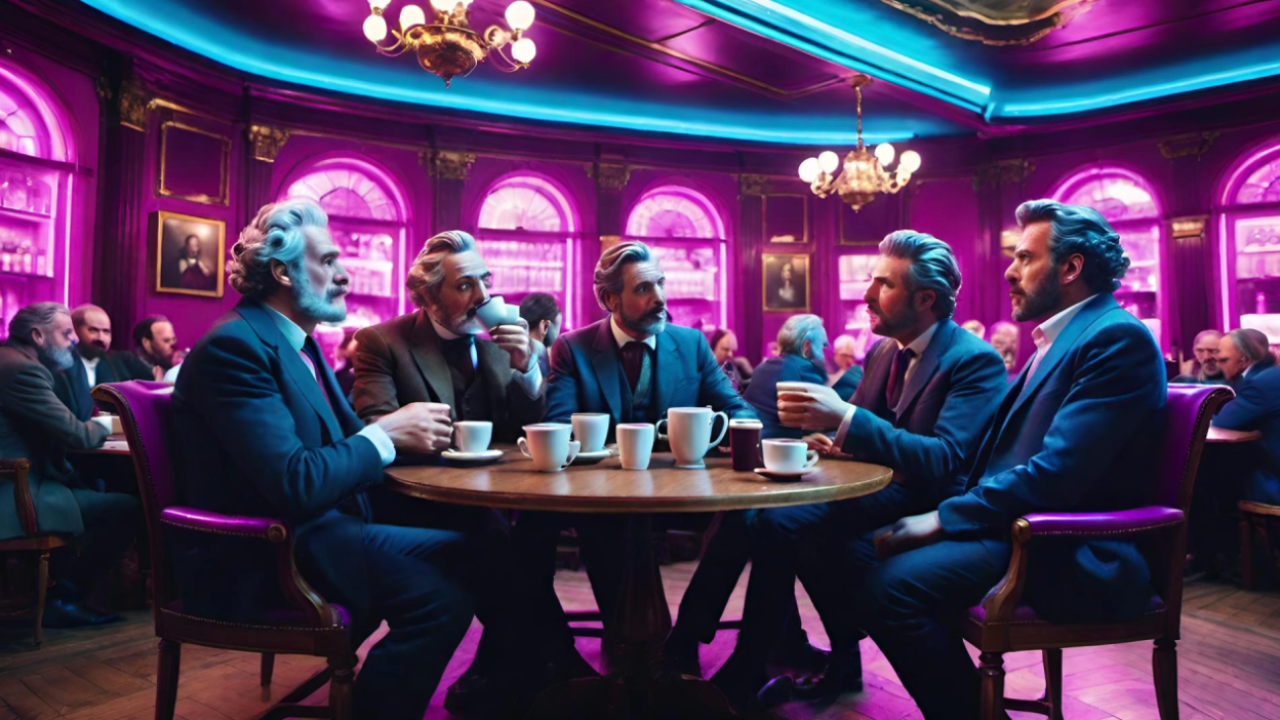
In the heart of Vienna, Professor Schneider, a retired philosopher and opera enthusiast finds himself pondering over a dilemma at Café Venditio. With its grand interior, high ceilings, marble tables, and elegant chairs, the coffeehouse provides the perfect backdrop for contemplation.
The professor, who has made a career out of dissecting the human condition, had purchased two tickets to tonight's performance of "Die Zauberflöte" at the Vienna State Opera. He had hoped to share the experience with his wife. However, as fate would have it, his wife fell ill, leaving him with an expensive extra ticket and a decision to make.
Lesson #1: Seize Opportunities
As he sips his Wiener Melange, the professor notices a young man intently sketching the intricate details of the coffeehouse. Intrigued by the artist's talent and sensing an opportunity, the professor decides to go outbound. He approaches the young man's table with a warm smile and an outstretched hand.
Lesson #2: Build Rapport Through Genuine Interest
"Excuse me, young man," the professor begins, "I couldn't help but notice your exquisite sketches. You've really captured the essence of this place. Do you come here often to draw?"
Max, the artist, taken aback by the stranger's forwardness and surprised by the interest in his work, replies, "Yes, I do. My name is Max and I come here quite often to find inspiration."
The professor, seizing the opportunity to build rapport, continues, "Ah, a fellow seeker of beauty and truth. Tell me, what draws you to this particular coffeehouse, Max?"
Lesson #3: Listen Actively and Ask Open-Ended Questions
As Max shares his love for the atmosphere and his dreams of artistic success, the professor listens intently, nods along, and asks open-ended questions. Max's eyes light up as he describes his passion for capturing the essence of the human experience through his paintings.
The professor, mirroring Max's body language to create a sense of connection, assesses Max's needs and desires, while slowly building a case for the proposition he is about to make. "It sounds like you have a real talent and dedication to your art, Max. Tell me, what are your aspirations as an artist?"
Max's shoulders slumped slightly. "It's my dream to make it as an artist. But some days... it feels like I'm shouting into the void. And then there's rent to pay, supplies to buy... it's not easy."
Lesson #4: Personalize Your Pitch to the Situation
"Gentlemen, I couldn't help but overhear your fascinating discussion.”, Hans, a seasoned waiter says as he approaches the table. “Might I interest you in one of our specialty coffees? An ‘Einspänner” seems particularly fitting for this conversation. And if I may be so bold, our Sachertorte is not to be missed. In fact, it's been known to inspire great minds and bring clarity to even the most complex discussions. We have a special offer today – buy one slice, get the second half off."
The professor chuckles, appreciating Hans' subtle sales pitch. "Thank you, Hans. I'm quite content with my Wiener Melange for now”, but Max, tempted by the offer, agrees to two slices of the cake. Hans, employing the scarcity bias, adds, "Excellent choice, sir. I should mention that we only have a few slices left, so you're in luck."
Lesson #5: Create Intrigue and Urgency
Returning to the conversation, the professor seizes the opportunity to make his pitch. He leans in, his voice low and conspiratorial. "Max,” he begins, "I have a proposition for you. A once-in-a-lifetime opportunity that could change the course of your career and your life. But before I reveal the details, let me ask you this: if you had a chance to boost your career, to really get your work out there, how far would you be willing to go?"
Max, his heart racing and his mind reeling, takes a moment to consider the question. He thinks of the countless hours he has spent hunched over his sketchpad, the sleepless nights haunted by visions of the masterpiece he knows he was born to create.
Hans, the waiter, lingered nearby, ostensibly arranging sugar packets. He developed a knack for sensing pivotal moments in conversations, and this one crackled with potential.
With a nod of his head and a steely resolve in his eyes, Max utters: “A lot, I guess.”
Lesson #6: Use Anchoring and Framing
The professor pulled out the ticket, turning it over in his hands. "You know, Max, the opera isn't just about the music. It's a gathering of Vienna's artistic elite. Collectors, gallery owners... people who could really appreciate your talent. This ticket... well, it usually goes for about €250, but for you... let's say €150. What do you think?"
Lesson #7: Address Objections with Social Proof
Max, intrigued but hesitant, raises an objection, "Professor, I appreciate the offer, but €150 is still a significant investment for me. I'm not sure if I can justify the expense, especially without any guarantee of real benefits for my career."
The professor, sipping his Wiener Melange, nods in understanding, and employs the principle of social proof. "I understand your concerns, Max. But let me tell you, 'Die Zauberflöte' is a highly sought-after performance. I've brought many young artists to the opera over the years, and they've all found it to be a transformative experience. In fact, just last month, I attended with a talented painter who ended up connecting with a prominent gallery owner. That one connection opened up a world of opportunities for her."
Lesson #8: Reframe Objections as Investments
Max leans back in his chair, considering the professor's words. The idea of rubbing shoulders with potential patrons and making valuable connections is appealing, but the financial risk still weighs heavily on his mind. “I understand the value, Professor, but I'm not sure if I can justify the expense right now. I have bills to pay and art supplies to buy."
The professor, employing the framing effect, responds, "Max, think of this not as an expense, but as an investment in your future. Every artist needs inspiration, right? And connections. This isn't just about tonight. It's about the ideas you'll get, the people you'll meet. For all we know, your next big commission could be sitting in the lodge next to ours. Can you really put a price on that kind of opportunity?"
Lesson #9: Offer a Low-Risk Trial
Sensing Max's inner turmoil, the professor adds, "I'll tell you what, Max. Why don't you join me for the first act of the opera tonight? Consider it a free trial. If, after the first act, you don't feel inspired or see the potential for your career, you can leave, no strings attached. But if you do find value in the experience, we can talk about the rest during intermission."
Lesson #10: Leverage Reciprocity and the Halo Effect
As Max mulls over the professor's offer, Hans, the ever-attentive waiter, approaches their table. "Gentlemen, can I interest you in another round of coffee or perhaps a slice of our famous Apfelstrudel?”
The professor, recognizing the power of reciprocity, adds, "Max, if you decide to join me at the opera tonight, I'll treat you to a slice of that delicious Apfelstrudel. Consider it a small investment in our newfound friendship."
Lesson #11: Value Relationships Over Transactions
Hans, the waiter leans in. “If I may offer a bit of unsolicited advice, as someone who has seen many a deal made and unmade in this very coffeehouse?" The professor motions for Hans to continue. "In my experience, the most successful transactions are not about winning or losing. It's not about the price or the terms, but about the relationship and the trust that's built throughout the process.”
Lesson #12: Close with Confidence and Reinforce Value
Max, feeling more reassured by the free trial offer, agrees to the slice of Apfelstrudel and to attend the first act. As they agree to the deal, Hans presents them with the bill for their coffees and cake. "Gentlemen, your total comes to €24. A small price to pay for the priceless wisdom and opportunities shared at this table."
The professor waves Max's hand away. "Allow me, young man. Consider it an investment in your future success."
Max took a deep breath, his eyes shining with a mix of nervousness and excitement. "You know what? Let's do this. I mean, if I don't take chances, how will I ever get anywhere, right? This... this could be exactly what I need."
Max feels a sense of clarity and determination that he has rarely known before. They keep chatting for a while, while he finishes his Apfelstrudel. "So I will see you later, and bring the money to the opera. I am already very excited. Thank you for this opportunity", he concluded.
As they part ways, Max leaves the coffeehouse with a newfound sense of purpose, a ticket to his artistic destiny, and a slightly lighter wallet. The professor, meanwhile, savors the final sip of his Wiener Melange, content in the knowledge that he imparted valuable life lessons to a young artist and solved his ticket dilemma.
The aroma of his Wiener Melange lingered in the air, a suitable end to a productive afternoon at Café Venditio.
When Ethics and Sales Collide: The True Test of Character
Just as he was about to signal Hans to clear the table, his phone buzzed. Glancing at the screen, his heart skipped a beat. It was his wife, Elise.
"Darling," her voice rang out. "You won't believe it, but I'm feeling much better! The new medicine worked wonders. I think I can make it to the opera after all. Won't it be wonderful to see 'Die Zauberflöte' together?"
The professor's blood ran cold. He glanced at his watch – barely ten minutes had passed since Max left with the ticket. If he hurried, he might still catch him.
But as he stood up, a war of emotions played out within him. On one hand, he had made a deal with Max, one that could potentially change the young artist's life. The principles of integrity he had just espoused to the young man echoed in his mind. On the other hand, this was a rare opportunity to enjoy an evening with his beloved wife, who had been ill for weeks.
As he hesitated, Hans appeared at his elbow. "Is everything alright, Professor? You look troubled."
The professor sank back into his chair, the weight of his decision heavy on his shoulders. "Hans, my friend," he said slowly, "what would you do if you had to choose between keeping your word to a stranger and fulfilling a long-standing promise to your wife?"
Hans raised an eyebrow, intrigued by the philosophical turn of the conversation. "Ah, Professor, that is quite an ethical dilemma. Perhaps another coffee while you consider your options?"
As Hans shuffled off to bring another Melange, the professor stared out the window at the Opera House into the distance. The next move was his, and whatever he decided would reveal volumes about his character and the true value he placed on his own teachings and integrity.
The opera would begin in two hours. The clock was ticking, and Professor Schneider had a decision to make.
Would he pursue his personal pleasure with his wife, or stick to the agreement he made with the young artist, whom he sold the ticket to?